A personal blog sharing experience, reflections and inspiration about education, in particular early childhood education, listening, democratic learning and introducing the idea of Original Learning.
För nästan 6 år sedan kom jag på en idé att starta International Fairy Tea Party - en global älvkalas.
Syftet är att inte bara fira barns lek och fantasi - men för att skapa tid och plats för vuxna att kliva in i barnens lek och fantasi också. Möjlighet för vuxna att observera hur barnen lekar, hur deras fantasi fungera och att delat i den process.
Det har varit en utmaning med älvor eftersom många tror att det är en "flick-grej" men idéen har varit ser till att alla fick leka med älvor och som älvor. Vi frågade om det fanns pojkälvor, om det fanns arga älvor, elaka älvor, krigare älvor, gamla, unga... det har varit ett bra sätt att utforska värdegrunden med barnen, att utvärdera normen och utmana stereotyper - en resa för barnen, pedagogerna och föräldrarna. Vi firade varje år och såg hur pojkarna kom med drakvingar första året (för att föräldrarna var mest osäkert) till följande åren pojkarna och flickorna fick älv-vingar och njuter av flyg-krafter, magi och allting dom kopplade till älvor...
Det har varit ett enormt bra sätt att utforska naturen... helt plötsligt såg barnen små små detaljer som dom hade missat förut... var nyfiken på ett annat sätt. Sagor, magi och naturen blandades naturligt tillsammans. Barnen vill ta hand om naturen för att uppmuntra älvorna att besöka - vi plockade mycket skräp som andra lämnade...
Vi lärde oss om hela världen... vilka andra länder deltog... tänkte dom fira på samma sätt... att vissa firade långt före oss, för att i Nya Zealand och Australian dagen började innan oss... och det är vår där när det är höst här. Det firades på olika språk. Det firades inomhus och utomhus, det har firats under orkaner i Bahamas, regn och sol - med familjer, förskolor, skolor och sjukhus - i städer, på landet och i flyktingsläger. Det har varit ett sätt för oss att se likheter med resten av världen.
Vi har faktiskt täckt hela läroplan med älvorna - matte, språk, vetenskap, teknik, konstruktion, kreativitet, dans, teater, hållbarhet, värdegrund osv osv - och det finns många idéer på den här blogg samt på facebook siden International Fairy Tea Party - där i början av augusti kan man skriva upp för att vara med årets firande... man finns då på en liten karta av världen med alla andra firande... och efter firandet är det bra om man dela lite bilder... antingen av själva firande eller förberedelser (alla vill/få inte dela bilder av barnen).
Syftet har varit att skapa en ny tradition som är barnens... som är ett sätt för vuxna att kliva in i barnens värld...
är älvorna på riktig... ett barn svarade
"dom är riktig... på låtsas"
Under är en film av bilder från runt om i världen - en älvkalas kan ske på många olika sätt!
Är ni intresserad av en massa älvkort - där jag, utifrån en normkritisk synpunkt, hittat bilder av fula, vackra, med/uran vingar, gamla, unga, pojkar, flickor, arga, läskiga osv älvor för att utmana vad en älva är... e-mail mig och så kan jag skicka bilder för er att skriva ut och fråga barnen kring... under finns ett exempel.
Pockets... I love them... as do my two daughters... but seldom do we get decent pockets in our clothes, compared with the pockets of my husband and son. In fact when we do get a garment with a decent pocket it is always commented on with great joy... especially in skirts and dresses. I mean what is up with fake pockets? Why bother? And why are pockets nearly always so much smaller? Of course you don't have to spend many minutes to read all about the history of pockets and how it is about power, the men being in control of the money etc and about how women look rather than practicality. BUT that this should all impact young children's clothing too seems ridiculous... girls just as much as boys like to collect things and save them in pockets... there is no gender difference in this behaviour - maybe from child to child, but I have not seen a difference between boys and girls during all my years of working with young children. I have seen, both boys and girls, fill their pockets with so many things that their trousers would no longer stay up. My daughters, when they were toddlers, loved pockets and always stuffed them with things... and if they lacked enough pockets they used the body they wore under their clothes as a giant pocket... so many times the staff at their preschool would giggle and hand over a supply of pretend food and other toys that they found stuffed down my children's clothes when their nappies were being changed. Why are children being dressed in mini-adult clothes? Why not let them be the children that they are? That the size difference between boys and girls should not differ in the way that it does... if you are 104cm tall regardless of gender, then the clothes should fit that height... not be shorter and tighter for a girl. I ended up buying a great deal of boy clothes for my girls - partly because they were tall for their age, so I got better value from the clothes... and also realised those clothes were less flimsy and held better for climbing and play than girl clothes... which makes sense because at that age children regardless of gender are playing in pretty much the same way... until society informs them that they should not be. I got called out by a 5 year old girl about my choice to wear super hero t-shirts - saying that spiderman was for boys... and that meant i was a boy. I simply answered that anyone can like spiderman and that I was most certainly still a girl. Within a week the girls in the group (that overheard the conversation) were coming with spiderman caps and t-shirts - as well as other superheroes. I also went out and bought myself more superhero t-shirts to really emphasise that superheroes are for anyone who likes them. I would also like to point out that most of my t-shirts are men's t-shirts... as the women ones are always too short and fitted... now I don't mind fitted... but they don't fit my body... the waist is always too high - and I really like my t-shirts and tops to not just meet my jeans/trousers but to be of a length I can tuck in on cold days. Oh and don't even get me started about superhero underclothes... all my superhero socks come from the men's section and finding underpants for women with superhero motifs is not so easy as it is for men... but I am going off track now... This is all makes me think of the book "Experiencing Reggio Emilia: Implications for preschool provision" edited by Lesley Abbot and Cathy Nutbrown where there is a chapter called "Sunniva's extra pocket" by Caroline Hunter. A teacher, parent of children at preschools in Reggio Emilia, and then translator for Reggio Children. In the chapter she describes her experience as a aprent of children attending preschools in Reggio Emilia and she agreed with Malaguzzi's statement that her children were given "extra pockets" to dip in when needed later in life... Amelia Gambetti wrote
In Reggio Emilia we have the highest quality kinds of materials we can find, not so that the children can become geniuses but so that they and we have many opportunities to discover their learning processes and their abilities to think. I believe that when you give this to children when they are so young, when you empower them in their thinking, it stays with them forever - as Malaguzzi used to say, like an extra pocket. They understand the power of their intelligence.(Understanding the Reggio Approach: Early Years Education in Practice. Linda Thornton, Pat Brunton 2005)
But my question is - if society is giving bigger pockets to boys and often fake pockets to girls... we need to be aware of this extra pocket that is being provided and that it does not mirror social stereotypes. That these pockets are ample enough for all to stuff their experiences, thoughts, reflection into regardless of gender.
If we want to empower children we need to make sure that the extra pocket is not for decoration but is substantial enough to fill. Below are some more links to read about connected to this thinking.
for some reason we take away the pink and the princess - as if this pinkness is the problem. Choosing to wear pink and choosing to be a princess is not a problem... ONLY if it is the only story that is being offered to what girls should connect with.
yeah, my son caused quite a stir in a small French town when he wanted to wear a pink skirt to dance in... as his big sisters always wanted to dress up for dance, it made perfect sense for him too. As well as green glitter shoes at preschool until he got told by other boys there that green glitter is not for boys only for girls... he refused to put them on again... despite support from the teachers at the setting and from home...
IF schools and preschools are not working with these ideas and exploring gender stereotypes actively than the damage is done. Its not enough not to talk about it, and to be gender neutral... we HAVE to talk about... have the stereotypes and allow them to be available to all the children, to explore and discover the joy of play.
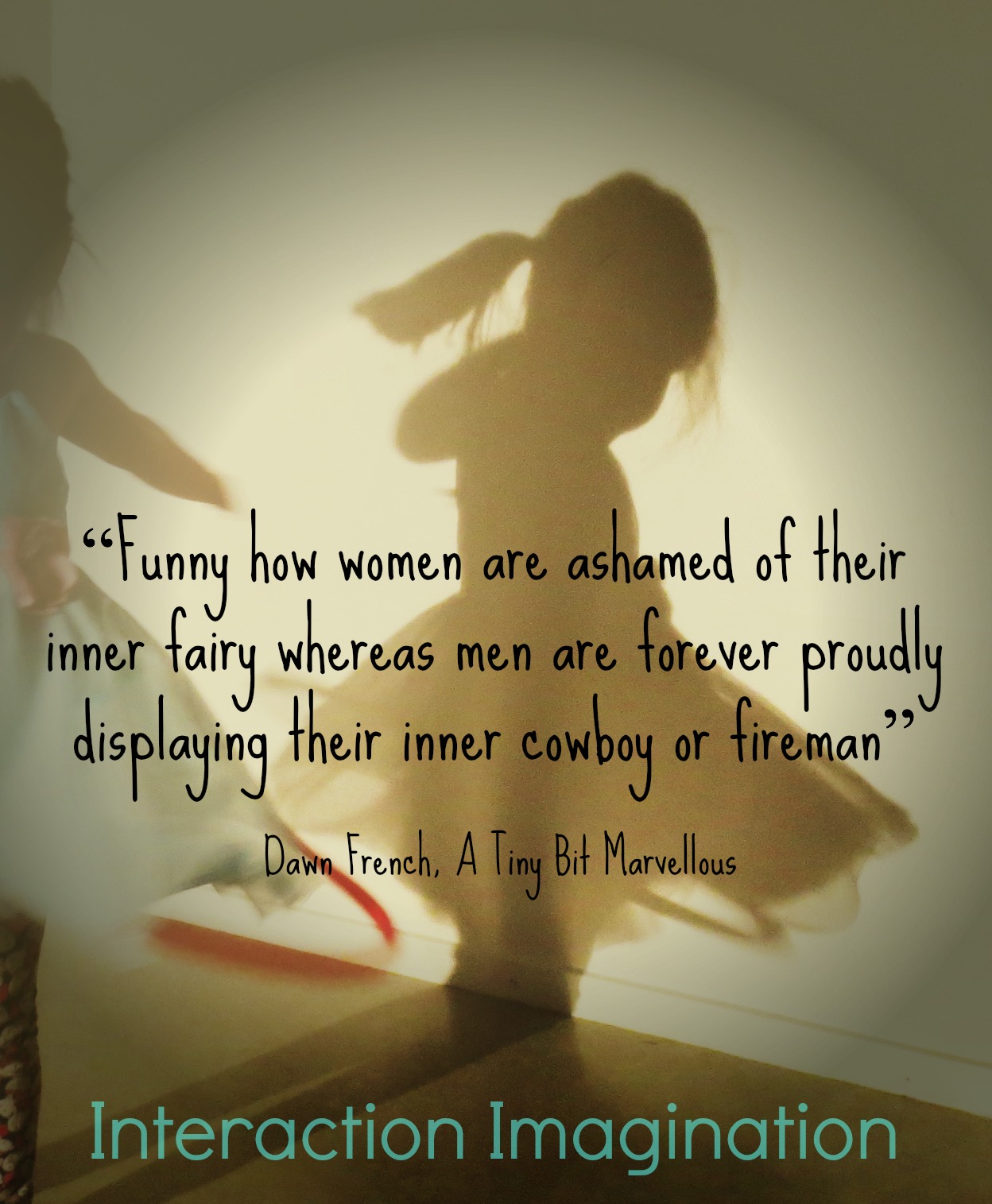
part of the International Fairy Tea Party is to also break down barriers of gender stereotypes... that fairies are not just for girls, that boys enjoy magic and flying too... that fairies are not just girls with pink tutus...
The March equinox has passed... this means that I will be starting to work a little more on the International Fairy Tea Party project...
This year I have decided that the theme will be #lookclosely - something that I saw happened naturally with my preschoolers (and myself) as we explored fairies... where do they live, where do they come from, how small are they really, can we find traces of them.. etc etc.
As we looked for clues we found so much magic in nature... we also learned a great deal about nature... and in turn there was a greater tendency by the children to take care of nature... both to protect the fairies and also to protect the nature they now understood better and marvelled at more.
In a recent post about The Art of Learning I was inspired by Arthur Harry Church who said "Until one has drawn it is impossible to understand" - that through drawing we notice details that we would otherwise have missed... through the movement of the pen we gain an understanding of the movement of the subject we draw... or an understanding of how it is made... etc.
By looking closely we also get this chance to se things that we might have missed.
By taking close up photos we get the chance to see yet another perspective of what we observe.
There are many ways to look closely... cutting out a small hole in some card can help children (and adults) focus on a detail rather than the whole... to look closely and observe what they know in a new way.
Taking close-up photos allows us to see new details... especially if you have a camera that kets you get really close... but the film I include here uses photos I have taken with my mobile phone... I do have a camera with a fabulous lens too... but I wanted the film to be an inspiration that does not require fancy technology.
Magnifying glasses are great simple ways of exploring nature in new ways - including the jars with magnifying lids.
microscopes too... for a real close up look - and technology is such that computers, i-pads etc can be linked up to digital microscopes which make it easier for young children to explore the very small.
My posts on Border Crossing reflects on nature and technology... another post of this kind will be coming too.
Sometimes drawing the details can be easier than drawing the whole... I have worked with children that preferred to draw using squares rather than rounded forms... so robots rather than people... and drawing cells or parts connected together was easier than a whole plant - this gave the child a framework to excel within their own competence and from that feeling of competence build the details together until a whole was made... ie learning to draw in multiple ways based on the child's own competence and confidence.
The close up pictures are more abstract... and for those children who do not feel comfortable making mistakes, the abstract is a more comfortable place to start from. And for me it is always about helping children to find their own starting place to be able to then go on to explore their own learning and also discover techniques and learn to dare to take risks... and yes I think drawing and art is also risk taking... for some it's more scary than others... just as some children will jump from high places without blinking an eye while others barely dare to climb that high let alone jump..
So looking closely is not just about the child looking at nature close up... it is also a chance for us as educators to look closely at the child to better understand - the child, their play and their learning.
I hope you join in The International Fairy Tea Party this year in September... and celebrate play and imagination. I hope that you join in the #lookclosely theme and explore the world through new eyes...
but you do not HAVE to do the look-closely theme to participate in the International Fairy tea Party... that you can do any way you think is best for the children you work with... the most important is to play and to imagine.
and of course we can look closely year round...
Looking closely means slowing down... if we are always in a hurry that we will miss the details, miss the beauty, that is hidden before our very eyes...
It is linked to original learning in the sense that we learn organically through our observations, by awakening natural curiosity etc - read here to learn more about Original Learning
Below are some photos with comments and also some quotes...
with my superduper camera I can take close up photos of birds... but I still have to be quiet and learn to place myself right in order not to disturb the birds. Using photography as a language to look closely means learning about animal behaviour, our own impact on nature, how the weather impacts nature etc etc...
taking the time to slow down enough to see things... like a dead bumble bee... then to take the time to look closely. Looking closely means slowing down
beauty and fear... sometimes it is a fine line... learning to respect nature, and how to handle nature properly.
all seasons have magic to share... fairies were a gateway for us as a group to learn about nature...
by playing we make further discoveries - how does light impact the leaves, what happens when we squash a berry?
looking closely is a part of this rich sensory experience children need to be exposed to
I sit here at Fotografiska (Photographical Museum) with an amazing view from the café restaurant over the water and Stockholm... having being inspired to write a blogpost.
The exhibition by Viviane Sassen had images that explored shape and colour - it also had a room that allowed visitors to explore shadows and colour... the explanation of the shadow exhibition "Aura" is described in the photo below.
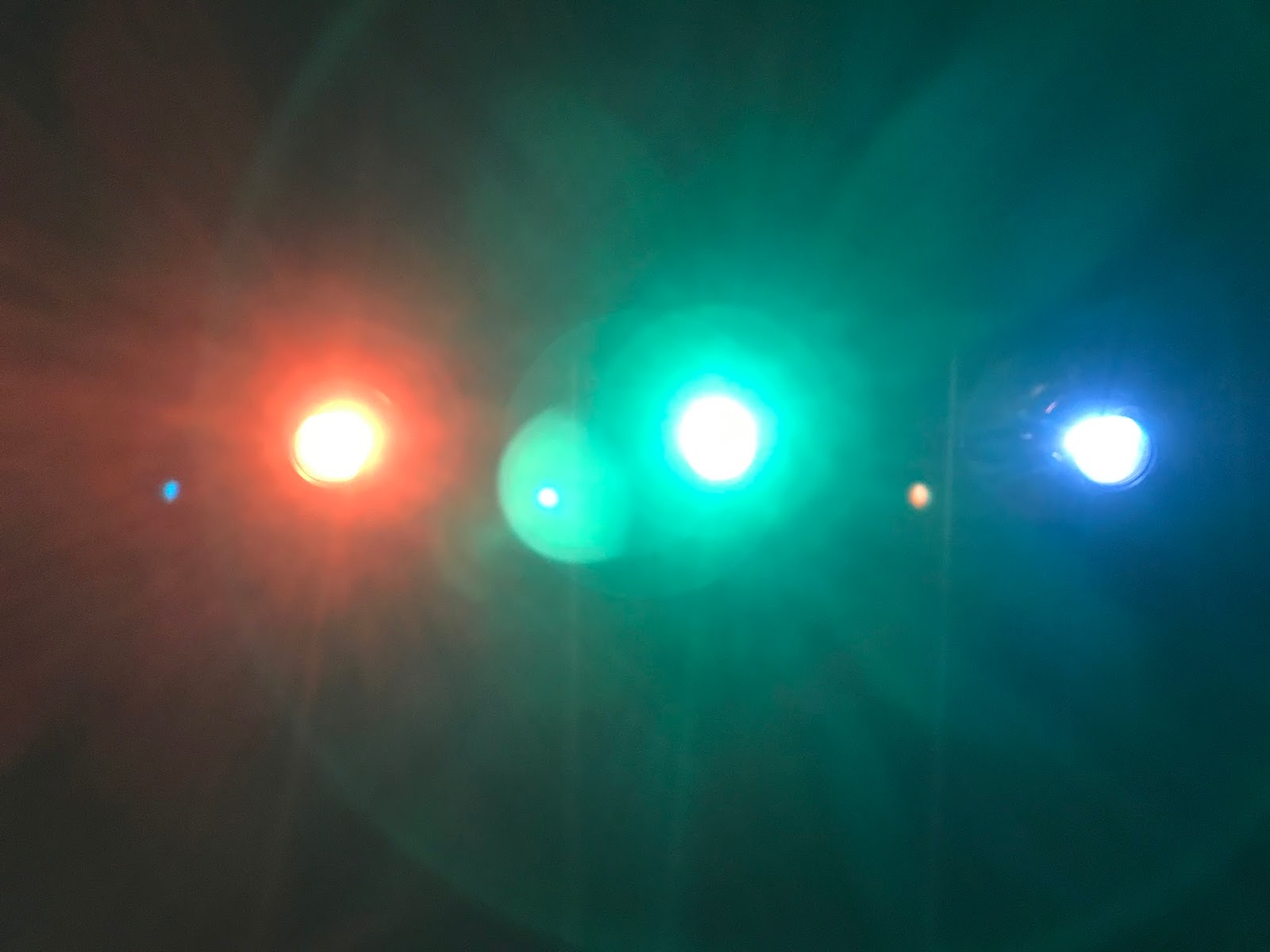
Here are some photos I took of myself exploring the light and shadows and the colours ... of course I took a whole heap... including a whole series of me walking slowly from one side to the other side and watching the colours come onto the screen as my body blocked the lights... as you see below the lights were arranged in a row - and together they made the screen white as you can see below.
The real fun came when you put your body in front of the lights. Personally it would have been fun if there had been a basket of objects relating to the exhibition - squares and triangles to play with as well, and then even more interesting personal art creations could evolve.
Below you can see two examples of her work where Sassen explores shapes and colours. Having worked with young children for a very long time I find these photos very inspirational as an inspiration source with children... to give the children various shapes and colours and to create shadows and take photos of their work... even without the use of shadows this would work as a great art exploration of shapes and colours.
As you see below in the outdoor playworkshop I held last week we also explored shapes, colours and shadows, using the sun, and the recently made colour exploration we had done on a sheet.
This is a very simple way to create shadows... the wetness of the sheet also added an extra dimension to the whole shadow exploration.
Even above you can see that not all shadows are black... which is the usual answer I first get when I ask children, what colour is a shadow...
The below photographs are from the exhibition at the Fotografiska (if you are in Stockholm it is available to check out until 12th of November)
These images remind me of a light and shadow exploration in Aðalþing Leikskóli (preschool) in Iceland... below are some photos I took there. The lights COULD be arranged in the same way as above to create the coloured shadows... apparently I was too mesmerised by the whole thing to actually take a photograph of that and of the lamps... they were lights that that were on a flexible neck so they could be moved around for the children to explore.
In June I visited Överby Preschool in Vaxholm community... I have written about their sensory room - and you could read about it HERE as they work a great deal with light and shadow too as part of the sensory exploration. Eva Tuvhav Gullberg was the person who showed me around - she also took me to Redutten and an exhibition of art that she and other local artists had created with children from the area... light and shadow was a part of this too... take a look at the below photographs for inspiration...
shining light through a crystal
shadows via a reflection in a mirror
using two lights to create shadows of the robots the children had made from recycled materials... making more art from the art. Both lights could be moved around to change the dynamics of the shadows. The children could have the focus of creating constructions in order to make a dreamworld, or a the background for a puppet show, or... whatever your imagination comes up with... now I want to create a shadow forest...
experimenting with using lids and other materials on the lights to create new colours
A few years ago I created a light and shadow exploration for my preschoolers... here are a few photos from that... the idea was for the children to climb into their own artwork and to experience it in a new way, at the same time create something new... this was the final part of a longer exploration of light and shadows with these children, so they did have an awareness of what they were creating... the first few times were about exploring and playing... so it really is worth repeating these kinds of experiences for the children to gain a deeper understanding and let their play develop into a new kind of learning.
The International Fairy Tea Party has also been a great opportunity to explore shadows and the colour of shadows... fairy wings make great shadows
There are many other ways to explore shadows and the colour of shadows... using projectors, lights, the sun, and overheads...
shadow puppet shows... not all of the shadows are black!
magnatiles on the overhead make colourful shadows
Sometimes there are great outdoor installations, like this one in Blåsut that creates colourful shadows when the sun is out.
ice-cream spoons on the overhead
more mirrors outside to create reflection and shadows
The potential to explore shadows is great and varied... and so much fun... a few more photos to inspire to end this post with - outdoor shadow explorations.
The next post from Fotografiska will be taking the perspective of looking at the photographs as a stimulus for dialogues with young children....
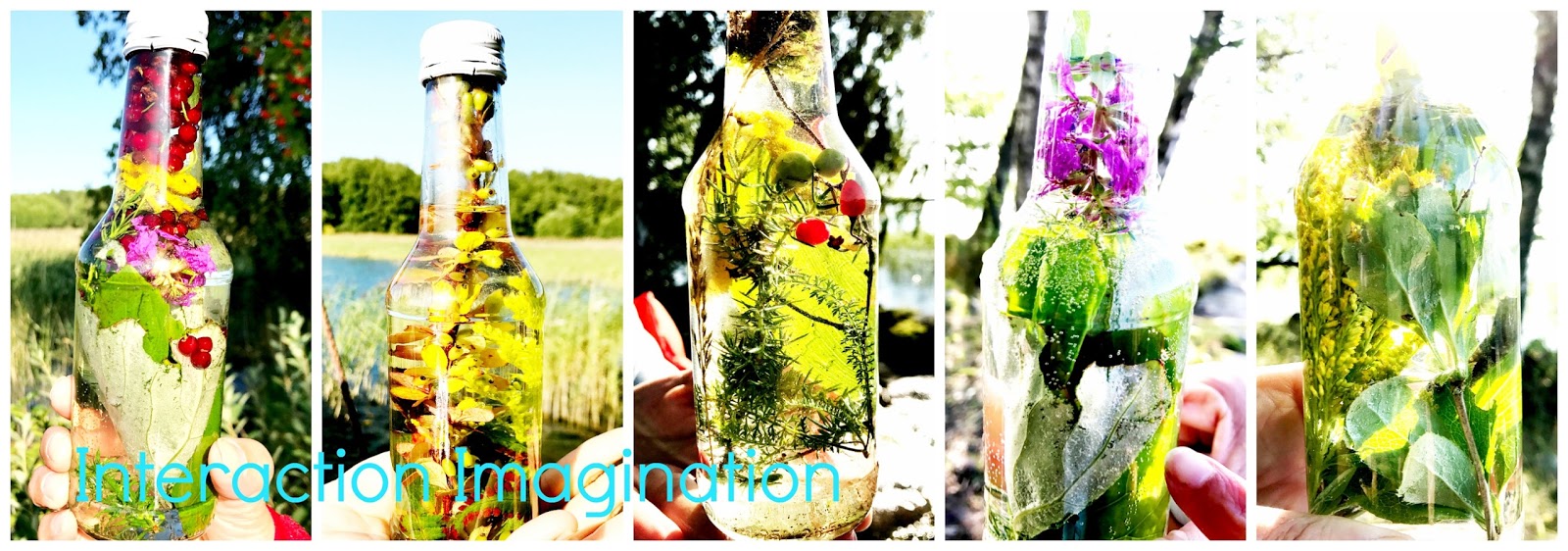
As part of the outdoor play and learning workshop we created bottles of nature. Since I had a focus on brining magic, imagination and creativity into play and learning the International Fairy Tea Party has been a great base for exploring these.
The idea was that the educators (I have also done this with children) should create their own magic potion, using what nature has to offer. I had 10 bottles of water... each filled to the brim, the purpose of this was so that water displacement could be experienced... as they put something into the bottle some water came out... some educators decided to empty a little water to create space... others just placed materials in carefully, and others enjoyed the splash of water coming out as they shoved more nature into their bottle... these are all different strategies and are worth while to observe as a teacher... do the children (or in this case educators) react as you though they would... do the observations give you more ideas about experimenting with water displacement?
No tools were given, so they had to find their own in nature to help get it down the narrow neck of the bottle... again this was with purpose to get children/educators thinking about problem solving.
In the forest there are things that should not be picked because they are endangered... this activity is a great way to share this information with children (and adults) in a meaningful way - to let them know that some leaves and flowers should not be in the bottle and explaining why).
As children/adults look for materials in the forest (or in any outdoor location of your choosing) the children get to see the small details, colours, textures, size, smells that maybe they would have missed. They make their own discoveries in nature.
When the children are satisfied with their bottle there is time to watch the sinking and floating, how the water and nature moves in the bottle if you put it upside down, or shake it... a chance to compare with others... how many have chosen the same things... why was that, what enticed them to putting that nature material in their bottles... this allows the children to see that sometimes the same material is chosen for very different reasons.
Then imagination can be brought back into the activity... what does their potion do... (reminding them that this is pretend) - is the potion meant to be bathed, in, wiped on the skin like a lotion, used on plants, on humans, as a medicine, to change things from one things to another... etc etc there are so many possibilities, really only the imagination can limit them... if you write down their words you have, as an educator, the chance to observe their language and communication skills. There is also the opportunity to take this further... to write stories about their magic potions (either together with the children if they are pre-writers - or let them write themselves if they are already writers and capable of creating their own stories on paper - drawing the story can also be an option). OR, the children could create a story together - thinking about what characters are in the story, what the potions do, For philosophical dialogues you could ask the children... are the potions for good or for bad., why are bad potions made.. how can the potions help people/animals/nature, which of the potions would be the most useful if they had to choose just one and why would it be the most useful...
The bottles I used were made of glass... of course plastic bottles can be used to... there could be an experiment with different size bottles, different shape bottles, different colour bottles... also the liquid used... one bottle could be oil, another water and a third vinegar etc so that over time the different processes could be observed - how do these liquids affect the nature inside them... if doing this maybe there is a need to have a more controlled content... ie the same number of berries, the same number of certain leaves etc...
The bottles can also be explored with light. We had painted on a sheet and when it was still wet we held it up with the sun shining through... we experimented with different materials to create shadows... including the bottles...
Other light sources can be used to explore the bottles - if you see in the film we did this... but think about doing this in the dark as well... or how about using UV light and giving the children the opportunity to experience the difference in colours... thus brining the nature bottles inside and connecting learning in and out.
Over time the bottles will change colour, the water quality will change, the contents will also change... many things the children can observe and ask questions about... or you as an educator can ask why the children think this is happening... thus children are given the chance to learn more about nature and science.
At the end of this post you can see a film I made about these bottles... including film footage of the bottles in action.
Of course there is the sensory value of these bottles too... to watch and be mesmerised with the finished bottles, using them as a calm down feeling. And during the collection process there is the smells and textures as well as the sounds and sights of the nature around them.
magic potions with preschoolers as part of an outdoor celebration of International Fairy Tea Party
magic potion making as part of an indoor celebration of International Fairy Tea Party ... indoors because of the fairy wings did not like rain... outdoor play came later when we took our wings off!!
Now for a few after photos... as I have kept these bottles for a year, and every now and again taken photos of them using different techniques... from sunlight, to torches and coloured light and also UV light...
sunlight - but why red? None of the other bottles went red despite containing the same berries... is it the mix of materials that has helped the red leach into the water...?
sunlight shadows
the mould growing is beautiful... this ONLY happened in one of the bottles
fairy lights to illuminate
looking at the details
fairy lights in front... behind and above and below... what difference does this make?
UV light... nothing in any of the bottles glowed... some just ended up VERY dark... if you want a contrast, make a nature bottle with tonic water... as that DOES glow with UV light.
more details . to watch how the colours change with time
Also interesting to watch how SOME of the bottle developed lots of particles at the bottom while others only a bit... so many differences and yet so many similarities to observe and compare and discuss.