Pages

Showing posts with label gender. Show all posts

Friday, 4 May 2018

The story of a clean classroom


I wrote this post for Teachwire about messy play within a Reggio Emilia Approach setting... that it is not just about pristine classrooms. This was a year ago, and I made the decision to share it on my facebook page yesterday... so I found it interesting to read a shared post about "clean classrooms" today...

Every "clean" classroom I've ever experienced in my observations (and in my time teaching) is not the product of well-behaved students. It's the product of a naggy teacher.
Children learn to equate the absence of clutter as "neat", "clean", and "organized". We tend to forget that organization starts in you. You see something that can be more efficient for you, so you set it up in a way that makes sense to you, then you maintain it because it works for you.
When you've organized a classroom and you seek to keep it organized, you're asking children to see things from your perspective and try to make sense of it, even if it just doesn't make sense to them, because it makes sense to you. That's pretty selfish, and definitely not anything I tend to see teachers reciprocating for the children they teach.
In a preschool classroom, when a teacher says "pick up" I watch what the kids do, not what the kids accomplish. If you look for what the kids accomplish, you'll see that things are no longer strewn out on the floor or haphazardly thrown across tables and shelves, and eventually it looks like organization--but is it?
If you watch what the kids do, you see them pushing things from the shelf into the crevice between the shelf and the wall. You see things get picked up from the floor and plopped into any open bin. You see kids hiding or even trashing toys because they've learned that the absence of clutter is what's expected when someone says it's time to clean up.
This teacher thinks that their kids have learned to value organization and that they've learned that cleanliness and tidiness is important in life, when really, this teacher has bestowed upon children a bad habit that's really, really hard to break.
I remember in the first grade, my desk (a small, one-seater desk with a compartment for books and utensils) was so "disorganized", my teacher singled me out in front of all of my peers, screamed at me, picked the desk up off the ground like The Hulk, and Hulk-smashed it onto the ground so everything in it flew out onto the floor. There was so much clutter in it, such a reaction seemed necessary to her. She thought she taught me a lesson--that she wouldn't tolerate my disorganization... by literally making the mess 100x bigger. And what was I expected to do in front of all of my peers? Put it all back in the desk. No practical assistance on what she wants it to look like. No guidance to help me get rid of trash I didn't need. That didn't make me an organized person, but it did desensitize me to the idea that organization and success aren't correlated.
I'm not being "too easy on kids" or engaging in wishful thinking when I say they'll pick up and organize things when they're ready to. I see it all of the time. When a kid steps on a lego and picks them up off the floor to avoid it, I see it. When a kid knocks a bin off the shelf and notices there were cars in it when it's the bin for blocks (maybe he doesn't pick it up, but he NOTICES it), I see it. In those moments where the mess is so overwhelming that nobody can move without breaking things and I sweep everything into a pile, start sorting things myself, and kids join in to help me, I see it.
Disorder is part of the culture of childhood. It's part of their culture we don't have the right to seek to change. Children are not wild animals we are charged with the task of taming--we're not that important. Children are also not premature businesspeople we are charged with the task of preparing for the workforce--we're not that unimportant. Everything they move, place, or scatter is there for a reason, even when it seems silly and ridiculous. As they explore routines and patterns--as their neural pathways start to form organized connections--they start to see value in certain forms of organization. And they may never see our ways as the right way.
And that's okay, because organization is about YOU, and what works for you--singular, you.
If you've got to clean up, don't expect kids to be doing it if you're not doing it.
If you've got to clean up, do it yourself, while they play, once you know the kids have lost interest or moved on (like workers at a Children's Museum do!).
If you've got to clean up, be there, watch them, thank them, and don't force them. Don't be my first grade teacher.
That's how you really teach kids to be clean. (Travis Manley)

I feel that children have a responsibility to each other - I always talked about it with them - why we put things back when we were finished. Because I believe in the competence of children. I know that if they are given the chance to understand why then they will see their play differently... not just their own play in isolation, but there play as part of a whole series of play that intertwine with each other.
We are responsible to create a play space for others - so that others knew where things were - and that meant even they would too as they could rely on the process. Of course MY role as educator has the bottom line responsibility to ensure there is space for the children to play... I often tidy things away as I see children playing, in an invisible manner to ensure their play continues and they have space... or ensure that things are not left out that can present a danger (risk for a little hurt is OK, its part of the process of understanding that when things get messy there is a risk of stepping on something and it hurts, or tripping, or sliding or whatever... or that things get broken... but that leads me to a possible future dialogue about how so many children are not the slightest bit bothered about breaking stuff... they shrug their shoulders and say we can buy another... it does not feel like a sustainable approach to play... but it is part of the whole theory of not putting blame on a child for breaking something as it might break their self-esteem.... but as I wrote, I will save that for another post)

As educators we need to be a part of the process - always helping - it did take some convincing others that us clearing up too was not taking learning or responsibility away and that it was part of the democratic classroom approach - if we want help then we help others - in this way we could be role models - often I heard from children "I did not play here" as a way to say, no I don't want to help - and I would answer “no I did not play here but I help anyway so that it is ready for play tomorrow or later or...” - I would never force them, but would remind them that help is a two way thing.Boys tended to be slower to catch on to this and girls more eager - so I would say to the girls I see you have done your share you can go do something else and let the boys finish off - in this way the stereotypes of good girls who tidy up is broken - and I feel that IS important 


I wonder how this impacts how educators react to the "clean classroom" concept... I mean in my many years working in early years settings it has been nearly always men that have challenged the whole order and tidy idea... let there be mess... Is this because as children boys always got off tidying up because "boys will be boys" while girls strived to be good and show their worth by pleasing the teacher by tidying up. So girls learn that tidy and order is part of pleasing others, a part of being socially approved, while boys never got to participate in this learning in the same way? And don't you in your head envision a female teacher rather than a male in the text above??? I am not saying the girls have got it right and the boys have missed out on something... what I am writing is that both have missed out on something.

Of course I would send any child- boy or girl - on if they had contributed enough - not like this every time but enough for the children to get an idea that helping others is a part of what a society does - and that if I want help I also need to help others.


Some children have required so much order - but for me to create it for them in their own personal chaos - others needed more freedom and flow but most children are in the middle which makes sense, as children are learning to connect and master left and right brain thinking as a whole - it’s going to swing - we want flexibility (chaos) and order (rigidity) but too much of either is going to limit - so the classroom needs to be able to offer both not only as a way to support the children but also to challenge them.


over the years I have had colleagues that have loved chaos and been vehement anti tidying and also colleagues who are order freaks - and everything in between. Children are just as diverse - so it’s about trying to find balance and trying to create the space that suits the group/class

Being npf, having three npf children and having worked a whole load with npf children over the years has lead me to understand that chaos and mess can be extra stressors - extra sensory input - so helping these children find routines to tidy up to de-clutter is essential. So the above statement that classrooms are tidied for the teacher's sake is rather a general sweeping statement that is also, I feel, incorrect. But I guess there are some educators out there that are not listening to the children and the clean classroom is about control rather than support and challenge.

Tidy up is a part of math - sorting - sometimes a part of film making - we made stop motion films of the tidying up - they were hilarious to watch together afterwards. Tidying up is not just about learning how to organise... it is about empathy, responsibility, cause and effect, sorting (get the children involved in how things should be sorted/tidied), collaboration skills, memory (where do things go), democracy (we all participate and contribute) - this means the teacher/educator is a part of the process not an observer - messes in preschool are always "ours".

Once a child I worked with had been let into the sensory room on his own (after I had left for home) the child had the most marvellous time throwing the lentils rice etc etc all over the place making it rain (at least this is how I imagine it as I found lentils etc on the highest of shelves - hahaha). What saddened me was that my colleague did not tidy it, even though he knew that I arrived just before morning gathering the next day and that that was the room we sat in to chat about what we would be doing during the day... there was a layer of rice and lentils on the floor. So first I had to deal with the shock that my colleague thought the fact that since I had introduced the sensory table it must my responsibility to clean up (not all staff were keen on those sensory tables you know) - then I had to make a decision about where are we going to have our gathering. I made the decision to postpone the meeting and ask the child to come and help me sweep the room. Not with anger or disappointment but just a simple matter of fact please can you help me. he came, he helped. I asked if he had a good time - which I think he must have for so much to be everywhere - he shook his head, I assume it was because he thought this was the right answer to give. I then said it was fine to throw the sensory stuff around, if everyone in the room was in agreement, and as long as he helped to clean up afterwards... or maybe we could take something outside instead that birds could eat afterwards... he opted for the second option... 


 "Messes" are often left out to continue another day, sometimes weeks, if it is an active play area. In fact for a while I took a series of photos called "Traces of Play" - as i loved seeing those small/large traces of play that some call a mess... its like the image of a dandelion  with the meme - some see a weed others see a wish.
Below are 8 photos from the Traces of Play series... things I found strewn/constructed/left with no children in sight...


I have images of BIG messes of a whole room littered with play - as all the contents of the preschools seemed to have ended up in one room... but the most marvellous play had happened in the process of that. By leaving the mess to the next day the children could decide whether it was play worthy or not... they made the decision to clean up first... because that was not the play for the day... apparently.


en global älvkalas

För nästan 6 år sedan kom jag på en idé att starta International Fairy Tea Party - en global älvkalas.

Syftet är att inte bara fira barns lek och fantasi - men för att skapa tid och plats för vuxna att kliva in i barnens lek och fantasi också. Möjlighet för vuxna att observera hur barnen lekar, hur deras fantasi fungera och att delat i den process.

Det har varit en utmaning med älvor eftersom många tror att det är en "flick-grej" men idéen har varit ser till att alla fick leka med älvor och som älvor. Vi frågade om det fanns pojkälvor, om det fanns arga älvor, elaka älvor, krigare älvor, gamla, unga... det har varit ett bra sätt att utforska värdegrunden med barnen, att utvärdera normen och utmana stereotyper - en resa för barnen, pedagogerna och föräldrarna. Vi firade varje år och såg hur pojkarna kom med drakvingar första året (för att föräldrarna var mest osäkert) till följande åren pojkarna och flickorna fick älv-vingar och njuter av flyg-krafter, magi och allting dom kopplade till älvor...

Det har varit ett enormt bra sätt att utforska naturen... helt plötsligt såg barnen små små detaljer som dom hade missat förut... var nyfiken på ett annat sätt. Sagor, magi och naturen blandades naturligt tillsammans. Barnen vill ta hand om naturen för att uppmuntra älvorna att besöka - vi plockade mycket skräp som andra lämnade...

Vi lärde oss om hela världen... vilka andra länder deltog... tänkte dom fira på samma sätt... att vissa firade långt före oss, för att i Nya Zealand och Australian dagen började innan oss... och det är vår där när det är höst här. Det firades på olika språk. Det firades inomhus och utomhus, det har firats under orkaner i Bahamas, regn och sol - med familjer, förskolor, skolor och sjukhus - i städer, på landet och i flyktingsläger. Det har varit ett sätt för oss att se likheter med resten av världen.

Vi har faktiskt täckt hela läroplan med älvorna - matte, språk, vetenskap, teknik, konstruktion, kreativitet, dans, teater, hållbarhet, värdegrund osv osv - och det finns många idéer på den här blogg samt på facebook siden  International Fairy Tea Party  - där i början av augusti kan man skriva upp för att vara med årets firande... man finns då på en liten karta av världen med alla andra firande... och efter firandet är det bra om man dela lite bilder... antingen av själva firande eller förberedelser (alla vill/få inte dela bilder  av barnen).

Syftet har varit att skapa en ny tradition som är barnens... som är ett sätt för vuxna att kliva in i barnens värld...

är älvorna på riktig... ett barn svarade
"dom är riktig... på låtsas"

Solägget inspirerad matte i skogen
nyckelpigor... små magiska varelser
älv porträtt
regnbågskrafter
naturflaskor - också kan länkas till att göra egna trolldryck

Under är en film av bilder från runt om i världen - en älvkalas kan ske på många olika sätt!


Är ni intresserad av en massa älvkort - där jag, utifrån en normkritisk synpunkt, hittat bilder av fula, vackra, med/uran vingar, gamla, unga, pojkar, flickor, arga, läskiga osv älvor för att utmana vad en älva är... e-mail mig och så kan jag skicka bilder för er att skriva ut och fråga barnen kring...  under finns ett exempel.


Wednesday, 2 May 2018

People in Childcare

Last week I presented at FSO-Dagen in Gothenburg, sharing wisdoms learned over the years doing philosophy with children. I also took the time to listen to Mats Olsson talk about Men in Childcare...

It was not one of those sessions listening about WHY there should be more men in childcare - as he said why talk about that, how often do we talk about why should there be women in childcare? Which is true... why do we need women in childcare.. what do they offer that is so important?
He also talked about his days working in preschools and the feeling of being the male representative - and also aiming to be a certain kind of masculinity.
Masculinity was not something that he wanted to define - I mean why should he, it is as broad and diverse as is femininity.. the problem is that often we get locked by the stereotypes of those roles rather than being free to experience the reality.

Mats is concerned about the dwindling numbers of men in early childhood settings... the number of men applying to teacher training for preschool has dropped, a larger percentage of the men drop out before completion... I think there needs to be more research into why this is the case.

In Sweden at the moment about 4% working in preschools are males... what I found interesting is that 10% of directors/headteachers are male...
If we look at male dominated professions we can find that there are often more women working in the branch, but less than that are represented in leader roles...
for example women make up 10% of the work force in the building industry and there is 10% females in leadership roles.
The reason why I point this out is that despite there being more women by pro cent in the building industry than there are men in preschools, men have a much better chance at getting leadership roles. Is this because the women do not want leading roles, or because they are not proactive in getting these roles or that this is one of the ways to keep men in preschool...

In the UK 2% of those working in the early years are males... I was unable to find the percentage of men running nursery and early years settings.. but statistics show that in primary schools (4-11 years) 14% of the workforce is male and 38% percent of headteachers are males. And in the UK as in Sweden males tend to get paid more than their female counterparts.
In my own career I have worked with men that have been given a larger wage just because they were men... they did not bring anything more to the work with children than did their equally qualified and equally experienced female counterparts... and in some instances I have worked with men with less experience and qualifications that were paid more than trained teachers with half a life time of experience... that particular person was not worth the money, his lack of experience and education was a hinder for him.
I have also worked with some talented males some without any education that I pushed to get qualified - others qualified and passionate.
The diversity amongst the male workers has been pretty much the same as the diversity amongst the females... from amazing educators to why the hell are you working here?

Mats brought up the problems some men face working in preschools and with young children... this irrational fear that they are going to do something inappropriate. in 2016 a preschool director had her life threatened because she refused to meet the demand of a parent that the male teacher at the setting should not come in contact with their daughter.  This sort of behaviour is not conducive to men feeling self confident to have a natural relationship with young children, where comforting, holding etc are an essential part of building relationships and children's self-esteem. If men are continuously stressing over "how will others perceive this" then it si not going to be natural and children will miss out on the fact that men, like women are filled with empathy, love, comfort and that these are not female traits but human traits.

Mats mentioned something about men being bossed around by the women... this is something that I have only ever really experienced once (but being female I might have missed it too) but at that particular setting I was the only staff member of 10 that had any training within early childhood education or teaching - could it be that the women, without training felt threatened that the men would take over (3 males)? I remember sitting down with two of the males and them telling me (after working there for 4 months) that they felt I was the first person that actually listened to their ideas and helped them implement them - ie we developed the ideas together into a more pedagogical form, that they would have been able to do themselves with more education and experience.

Is there a hidden need amongst (some) women to protect this female dominated arena from men... especially when they can see that men soon ascend the ranks and get paid more.
My own children went to a parent co-operative and my husband and I were the parents responsible for the staff... the hiring etc... it meant I knew what everyone earned and also meant that when my husband suggested that a new male pedagogue be given a certain wage I reacted that it was unfair to those that had worked there longer and had more education and training. My husband responded, but this is a good way to get everyone's wages up...
But really should we be relying on men to increase the wage? Shouldn't the work be worth more in itself? Why are female dominated professions paid less than male dominated... I looked into some of the wages In all these areas... and noticed that there is a difference across professions and even within professions... the biggest differences are women earning a lot less than their male counterparts in male dominated professions.
But does all of this matter, is it part of a dialogue even when we are thinking about getting more men into early years settings...

well I think it is. If women are always deemed as less worthy, are men going to be encouraged to engage in a profession that is female dominated by the rest of society? If there always going to be that sense of why are you working there, that sense of suspicion because it is seldom a profession that is held in high esteem or rewarded financially as are other professions... this is something that needs to be addressed.

We can make change in society by more males working with young children from preschool and up... not just because we need male role-models... as I am totally with Mats on this - we are not female or male role-models... we are humans first, and we should be role-models of good behaviour that improves our social chances at interacting with others, learning with and from others etc... men are needed in preschools to show that it is allowed. That we are human, we are people in preschool just as we are people in society. That there is just as much diversity within men, and within women as there is between them... and there are those that choose not define themselves by this binary system.

Both males and females in early years settings need to challenge the ideas of what is male and what is female - so that the children understand that do not have to do or wear or say certain things to be in tune with their gender.
A five year old once told me that I was a boy because I was wearing a spiderman t-shirt. I told her I was most definitely a girl. She changed her argument... only boys can wear spiderman. I pointed out that this was obviously not the case, that I had put on the t-shirt as a girl, and that I was still a girl and that I simply really liked super heroes... the following week several of the girls started sporting spiderman caps and other superhero clothes...

Interestingly I did a Mona Lisa art project with my group of 5 year olds, at their request, where I put their faces in the place of Mona Lisa's and they then painted using colours connected to the original artwork - one of the children asked one of the boys if he had now become a girl (since he was painting himself as a girl) The boy paused  - looked at his painting, then looked down at himself and then answered - still a boy. I also remember my son, at the same age, asking me that if he put on the Robin Hood dress-up clothes if he would still be Michael... (this totally explained why he did not like dressing up - this fear of becoming someone else)..

so maybe for preschoolers we need to think so much more about how we dress, how we communicate how we are dressing and that we can still be ourselves. Is there a genuine fear of changing into something else, or the opposite gender if putting on a garment.?

At this point I think of a male colleague who I had the honour of watching his own realisation of his power as a male educator in a preschool... I have been planning to interview him for some time... it feels like that time is close...

Have I answered any questions? No, it just feels like I have more.
What we need is acceptance that all are welcome in preschool.. that it needs to be a safe, stimulating place for all genders and all ages... adults and children alike. Society really needs to catch up...


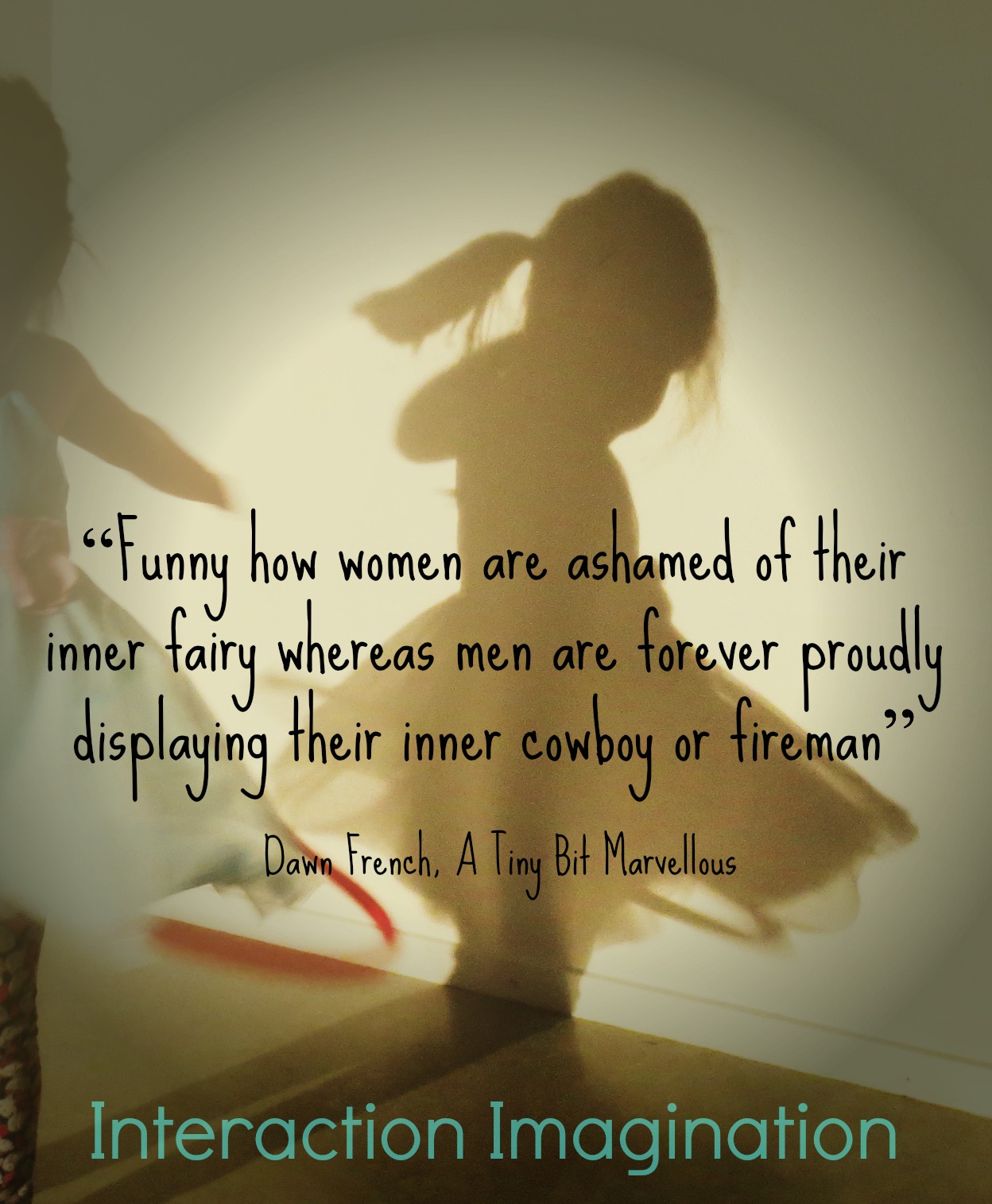
fairies are for boys too, all emotions and empathy belong to all genders, and yes my family created quite a stir in a small French village when I allowed my son to wear a pink skirt to dance in...
I am by no means an expert in this area... just a person who wants equality.

Fler kvinnor i byggbranschen
Förskolan - sällsynt med män
Constructing identities: perceptions and experiences of male primary headteachers
dödshot
should men work in early years

Sunday, 22 April 2018

The story of a pocket...

Pockets... I love them... as do my two daughters... but seldom do we get decent pockets in our clothes, compared with the pockets of my husband and son. In fact when we do get a garment with a decent pocket  it is always commented on with great joy... especially in skirts and dresses.

I mean what is up with fake pockets? Why bother? And why are pockets nearly always so much smaller?
Of course you don't have to spend many minutes to read all about the history of pockets and how it is about power, the men being in control of the money etc and about how women look rather than practicality.

BUT that this should all impact young children's clothing too seems ridiculous... girls just as much as boys like to collect things and save them in pockets... there is no gender difference in this behaviour - maybe from child to child, but I have not seen a difference between boys and girls during all my years of working with young children.

I have seen, both boys and girls, fill their pockets with so many things that their trousers would no longer stay up.
My daughters, when they were toddlers, loved pockets and always stuffed them with things... and if they lacked enough pockets they used the body they wore under their clothes as a giant pocket... so many times the staff at their preschool would giggle and hand over a supply of pretend food and other toys that they found stuffed down my children's clothes when their nappies were being changed.

Why are children being dressed in mini-adult clothes? Why not let them be the children that they are? That the size difference between boys and girls should not differ in the way that it does... if you are 104cm tall regardless of gender, then the clothes should fit that height... not be shorter and tighter for a girl.

I ended up buying a great deal of boy clothes for my girls - partly because they were tall for their age, so I got better value from the clothes... and also realised those clothes were less flimsy and held better for climbing and play than girl clothes... which makes sense because at that age children regardless of gender are playing in pretty much the same way... until society informs them that they should not be.

I got called out by a 5 year old girl about my choice to wear super hero t-shirts - saying that spiderman was for boys... and that meant i was a boy. I simply answered that anyone can like spiderman and that I was most certainly still a girl. Within a week the girls in the group (that overheard the conversation) were coming with spiderman caps and t-shirts - as well as other superheroes. I also went out and bought myself more superhero t-shirts to really emphasise that superheroes are for anyone who likes them. I would also like to point out that most of my t-shirts are men's t-shirts... as the women ones are always too short and fitted... now I don't mind fitted... but they don't fit my body... the waist is always too high - and I really like my t-shirts and tops to not just meet my jeans/trousers but to be of a length I can tuck in on cold days. Oh and don't even get me started about superhero underclothes... all my superhero socks come from the men's section and finding underpants for women with superhero motifs is not so easy as it is for men... but I am going off track now...

This is all makes me think of the book "Experiencing Reggio Emilia: Implications for preschool provision" edited by Lesley Abbot and Cathy Nutbrown where there is a chapter called "Sunniva's extra pocket" by Caroline Hunter. A teacher, parent of children at preschools in Reggio Emilia, and then translator for Reggio Children. In the chapter she describes her experience as a aprent of children attending preschools in Reggio Emilia and she agreed with Malaguzzi's statement that her children were given "extra pockets" to dip in when needed later in life... 

Amelia Gambetti wrote
In Reggio Emilia we have the highest quality kinds of materials we can find, not so that the children can become geniuses but so that they and we have many opportunities to discover their learning processes and their abilities to think. I believe that when you give this to children when they are so young, when you empower them in their thinking, it stays with them forever - as Malaguzzi used to say, like an extra pocket. They understand the power of their intelligence.(Understanding the Reggio Approach: Early Years Education in Practice. Linda Thornton, Pat Brunton 2005)
But my question is - if society is giving bigger pockets to boys and often fake pockets to girls... we need to be aware of this extra pocket that is being provided and that it does not mirror social stereotypes. That these pockets are ample enough for all to stuff their experiences, thoughts, reflection into regardless of gender.
Consider this quote from esteemed designer Christian Dior in 1954, reported by the Spectator, "Men have pockets to keep things in, women for decoration." The Wierd and complicated sexist history of pockets
 If we want to empower children we need to make sure that the extra pocket is not for decoration but is substantial enough to fill.

Below are some more links to read about connected to this thinking.


for some reason we take away the pink and the princess - as if this pinkness is the problem. Choosing to wear pink and choosing to be a princess is not a problem... ONLY if it is the only story that is being offered to what girls should connect with.

yeah, my son caused quite a stir in a small French town when he wanted to wear a pink skirt to dance in... as his big sisters always wanted to dress up for dance, it made perfect sense for him too. As well as green glitter shoes at preschool until he got told by other boys there that green glitter is not for boys only for girls... he refused to put them on again... despite support from the teachers at the setting and from home...
IF schools and preschools are not working with these ideas and exploring gender stereotypes actively than the damage is done. Its not enough not to talk about it, and to be gender neutral... we HAVE to talk about... have the stereotypes and allow them to be available to all the children, to explore and discover the joy of play.

part of the International Fairy Tea Party is to also break down barriers of gender stereotypes... that fairies are not just for girls, that boys enjoy magic and flying too... that fairies are not just girls with pink tutus... 


 you could read this text about the history of pockets from The Victoria and Albert Museum

five unexpected gender differences in children's clothes

The sneakily sexist food messaging in kids clothing

and from pockets to pocket money... gender differences

International Fairy Tea Party - facebook page

Sunday, 18 September 2016

The Lead up to The International Fairy Tea Party 2016

Time flies by... pun intended with my fairy wings!!

The equinox will be upon us during this week... that time of year where no matter where you are on this planet of ours we all have the same number of daylight hours...
It is by no accident that the fairy tea party is held during this week.
Around the world there are many differences... cultural, religious and also what resources we have access to... even how much play children have access to...

So the fairy tea party is about celebrating play... it is about celebrating imagination and creativity... and it is about doing this despite all of our differences on a day that unites us with daylight hours...

As of now there are over 70 celebrations that will occur around the world... USA, Canada, UK, Sweden, Germany, Bermuda, Pakistan, Australia, Costa Rica, New Zealand, The Bahamas, Spain, Egypt, South Africa and others... all will celebrate in their own unique way...

This is a chance for adults to immerse themselves in the world of imagination together with the children... to play.
For some this can be a challenge. Pretend play does not always come easy to everyone.

the magic of finding a leaf with a message on it... I told the children that I could not read it, as it seemed to be written in some other language, maybe fairy language... and asked if they could translate it... they could... and their imaginations kicked in big time... amazing wonderful translations about shy fairies, and how noisy we were and how we could get to fairyland
What I have found with fairies is that it allows children and adults to mix reality and imagination... to explore many areas... this year my preschoolers have been looking for evidence of fairies... a scientific approach... looking for clues and analysing them...

I held a workshop in Ontario... held by York Region Nature Collaborative with the aim to enable the educators to see the forest from a new perspective. The educators were sent out with the task to find evidence that fairies existed... they were then to present this at a dialogue circle and to decide together which piece of evidence could prove that fairies existed.
There were many wonderful ideas presented... a rich imagination of possibilities...
There was also a consensus that they had indeed been given a new perspective of the forest ( I had not revealed that this was my aim)... this did not surprise me at all as it is what I have observed with my preschoolers over the last four years..
Looking for fairies has allowed them to see things they would have missed... they see small details... they have used their imagination... and we have also learned a great deal about nature.

The children also have learned about taking care of nature... not just for the animals but for the fairies too...

bags filled with rubbish that we had collected in the forest.

I have also seen how it has been a great way to challenge gender stereotypes... that fairies are not just cutesie pink things... but can be warrior fairies, sea fairies, with wings, man fairies, baby fairies, scary fairies... with wings without wings, pretty, cute, ugly, old, skinny, beautiful, fat, mean, kind... there are so many different kinds of fairies...

During the last week my group of 5 year olds ordered a series of c.20 images of fairies from most fairy like to least fairy like... my motives are not just to see about gender and how the children think, but also to see their aesthetic and understand that... to allow them to explore the terms more, less, most, least, as well as to work on their reasoning.
At first some of the children had difficulties distinguishing between most beautiful and most fairy-like... so we talked about whether beautiful and being a fairy was the same thing... it was not according to the children... so we could move on... and after that there was a greater freedom of how the fairies were being placed.
In the end three fairies we placed as MOST fairy like
see the image below... where you see the top four most like a fairy

As you see two of the most fairy like are male fairies... I had not really expected this... but I knew my group enough to feel that male fairies would be in the top ten... in fact male fairies were spread out amongst the line of fairies...
My aim is to normalise everything... that male fairies are just as normal as female fairies, that old is as normal as young, that fat is as normal as thin... and that beauty is not just one kind.
Exploring fairies in this way empowers the children to accept differences.
It also empowers girls... in the sense that vey often fairies are seen as a girl thing... and therefore not at all suitable for boys... but I have found boys just as interested with the magic, with the flying, with the imagination, with the search for is this real, as the girls... it opens up a new world for the boys too.
Suddenly fairies is not just about pink... where often the phrase pink stinks is used as a girlie thing as if we should avoid it.
I believe we should embrace it... celebrate it, empower it... so that it is available for boys and girls.

here is the line of fairy images... the least like a fairy is a skeleton... because it is dead... because it might not be real... and the next least is a girl dressed up as a fairy, that many thought was beautiful, but came to the conclusion that it was not a real fairy.


My group of 3-4 year olds have often made decisions as to which (of 4 images) was most like a fairy based on "it is beautiful". I did this exercise three times with them over the last 3 weeks... each time different images... the last one being a focus on scary or ugly fairies. Even then the fairy they chose as the most fairy like was often because it was "beautiful".
When I asked what they meant by "beautiful" I was given the answer... "beautiful is that what I like"
Which opens up a whole new way of understanding children's concept of beauty...
I am now eager to explore...
is it beautiful because they like it
or do they like it because it is beautiful?
I am leaning towards the first option, due to how the children have been reacting to the images... But will stay open to see what happens...

This coming Friday we will celebrate... and the weather looks like it will be on our side... and we will be out in the forest... with wand making, potion making, painting on a plastic easel between trees, dancing, drinking fairy tea, fairy face painting (we let the children paint themselves)...

If you want to join in the fun and imagination... and a way to explore the world in a new way... what is real, what is pretend
"It is real by pretend" one of my children once said...
Then join up by using this link
International Fairy Tea Party
and sign up by writing your name (setting name, school name, family name or fairy tea party name) and your location... it is enough with the town, street etc is not necessary... then I will add you to the fairy map...
Then after you have celebrated please add a photo or two of your celebration... if you do not want to share images of your children, then please share an image of the set up or the aftermath... this is so that children can look at the images afterwards and se similarities and differences in their play around the world... it allows the children to come closer to other children in the world...

Of course I realise that a Friday might not be the best day for everyone... so if Thursday or Saturday is a better day, then please do play and imagine then instead... the idea is we share our play during the week of the equinox.


Sunday, 31 July 2016

Professional Development of the Third Teacher. 1.

This is the very first post I will share of the journey our third teacher will make this year.

For a while now we have been thinking about the idea of taking everything away and just letting the children play with their imaginations… well now we have decided to do that… but we are not taking EVERYTHING away, but we are leaving a great deal more space for the children's imaginations.

What will be left are blocks, stones, sticks, fabrics, books and materials in the art studio…

The idea is that we will add on to what we offer slowly… and each time we add something to the shelves it is considered…

I read a lot of posts about the third teacher… and the beauty of how we present the third teacher is often discussed…

I believe in the 100 languages of children… which means we as teachers have a hundred languages, and  a hundred ways to listen… BUT this must also mean the environment has a hundred languages too… and beauty is ONLY ONE of them.

Over the years I also think beauty is not something we can just use as a description for how a setting should look… as we all have our different perception of what is beautiful… from place to place, culture to culture, from childhood to adulthood… I know my sense of what is beautiful is quite different now than what it was as a child… and yet we tend to set up preschools from an adult sense of beautiful…

What I wish for my Third Teacher this year is develop the other languages (not abandon beauty… I don't want to lose languages, only gain them)… I want the Third Teacher to say welcome, to say explore, to say play, to say feel included etc…
The problem is that is an environment can say these things they can also say not welcome, don't explore, don't play, feel excluded… and I need to find out what my Third teacher needs for professional development to use the right languages… for a diverse, inclusive environment where there are equal opportunities for EVERYONE.

So we will be examining materials we will bring into the environment to see if they are inclusive… that boys and girls feel included, that all races, cultures, languages, religions etc etc feel included and valued.

So after a week of stripping our preschool down to the minimum… this is how it looks…

the art studio. Images have been taken from an adult height as well as a child height, to be able to evaluate the difference… we need to be able to see the rooms through the eyes of the child.

The BLUE ROOM… our rooms are given colour names so that we can change the purpose of the room without confusion. Children will still know where to go regardless of whether the construction area has changed with the library…
At the moment the blue room is a room where we have big motor activities… the is room for running, dancing, climbing, jumping, and louder voices than in other rooms… bigger actions often come with bigger voices…

this is one of the entrances… 30 children hang their clothes here… we have a whole system during the day so that we do not have all thirty coming in and out at the same time. Chldren are dropped off between 6:30 and 9:00 in the morning and picked up between 14:00 and 18:00 in the afternoon so there is seldom crowding problems then. The silver/white cupboard to the left is the drying cupboard… so we can go out in all weathers…

this is the other entrance for 10-11 children
the premises are an old post office… so they are not designed as a preschool… this presents both challenges and opportunities

The green room… for water play… also were the very small toilet is, and also where the nappy changing area is. This is one of the least developed areas.

the orange room… at the moment this is where the very youngest members of the preschool start their day and also where they nap.
The whole preschool is available to ALL the children. The children are aged between 1 and 6 - this also presents challenges and opportunities… more about these in later posts…

The rainbow room… this is where we have our philosophy sessions with the children… it is also where we have our little "library" - we also have a public library right next door to us. This room is our quite room… it is a room where we expect the children to play quietly, to read… and this is so that all children know there is somewhere to go when they need a quiet moment during the day.


The Red Room… this is also where we have a kitchen area and the dishwashers… it is the most central part of the preschool.  Again you can see the difference between photos taken at adult height and photos taken at child height. We have just moved the construction materials from the yellow room into here… they were not being used so much in the yellow room, so we want to observe if there will be a difference by moving them.

The yellow room.
Roll-play is now moved to the left, with a hug mirror there… the writing/drawing table has been moved from the red room to the yellow room.
Before this room was one ENORMOUS room… without the white divider to create the art studio… the room said run… which since we already has a room for running felt like we were not providing enough diversity… the preschool should say more than run… even though I know children LOVE running!


So there it is… the preschool, not quite ready for the children but almost…
Next week there will be a post… and then there will be two weeks break as i will be in Canada meeting up with other ECE teachers - sharing knowledge and inspiring each other… so no doubt I will return from there with more ideas, more languages for my Third Teacher to learn…

Wednesday, 16 September 2015

International Fairy Tea Party 2015

On Friday this week we will be celebrating International Fairy Tea Party - this will be the third year of celebrating.... it all started here - where I got inspired by an image, mistakenly the wrong image... but, well it got me thinking and I reached out to see if there were others that were also interested... fortunately Tom at Fafunia believed strongly not only in faeries but also in children's right to play... and so International Fairy Tea Party became a celebration for the first time in 2013.

It is exciting to see how the celebration is spreading... more countries joining in this celebration of children's play and imagination.

A question was asked on Filosofiska's facebook page (the preschool where I work)
"Så spännande! Blir nyfiken på hur ni tänker kring lärandets objekt, vad är det ni vill synliggöra för barnen med temat?" Which translates as
"How exciting! I'm curious how you think about the learning purpose, what is it you want to make visible for kids with the theme?"

First and foremost I think this is a celebration of PLAY... it is pure play not to focus on the learning... but children's right to play... yes, learning happens but what the fairy tea party is about, for me, is for us adults to be reminded about the value of play... the power of play... and creating the time for children to simply play and let their imaginations fly... and for us adults to step into this world of imagination and play with ideas and possibilities and enjoy the play.

Learning happens... I have seen the learning happening within the children's fairy world...
And the learning is not limited to the children... it has been for everyone that has been open... Here are some links to previous posts... so learning can be made visible...

BOYS AND FAIRIES - we discovered quickly that fairies are not just for girls... that boys have enjoyed this realm of magic, with flying, spells, wings, fairy dust, being small etc etc just as much. The children have been allowed the chance to experience gender equality in the sense that we are not dividing play into categories for boys and girls. STORYCARDS have been created to allow the children see fairies in many ways (there are also storycards with other themes to with norm-critical thinking applied to them) - the idea is that there are fat fairies, skinny fairies, angry fairies, kind fairies, babies, old with and without wings, ugly, beautiful, those that look real, those that look likema child or old person dressed up, different ethnicities, different sizes, different genders, hunters, warriors.... the idea is that the idea of fairy is not a fixed idea but has many possibilities... just as a flower is not a circle with five loops around it (as is often drawn) but comes in many sizes, colours, shapes, just as we humans come with out many variations... we learn to accept differences as natural, not simply tolerate differences.


FAIRIES IN THE FOREST - it has been a great way for the children to get out into nature and to make new observations... we had talked about "what is a fairy?" and the children described them as very small and with wings and magic... so when we went looking for them it was small details they suddenly saw... the small tiny things that had gobe unnoticed before... and this has been the same every year... forest fairy math


THE START OF A MAGIC FOREST - this post is one of many where we explored the fairy world through art... not just representing their ideas articistically, but also scientifically exploring colours and texture... we also explored the cultures of where the children came from, learned about limits and how disregarding them affects others, there were opportunities to develop motor skills... including blowing through straws to aid oral muscles for pronuciation.... Morocco inspired fairy art ; adding more to the magic forest ; Fairy sky - windpower ; Painting by letter... testing boundaries ; Fairy Portraits ; winter magic forest ; WINGS for fairies ; transforming friends into fairies ;


Philosophy - we have also explored fairies through philosophy... the children learning about respect for each other, listening to ideas, developing their own, developing their language skills, their social skills, their critical and creative thinking, - are fairies real? Which looks most like a fairy? Whats do they eat? Where do they live? Are there bad fairies? etc etc... following the children's interests we have explored the imagination and the reality of fairies... using activities and play to explore further and test ideas we have discussed.

MAKING WANDS IN THE FOREST  - we have learned about how we can upcycle things from the forest to create something new... with the fairy project we made wands... and then there was so much role-playing of transforming each other (and us teachers) into animals, objects etc, that made us laugh, and tested out our gross motor skills too.

FAIRY DOOR - maths has also been a part of the fairy exploration... forest math

Fly jumping - risk assessment has also been an important part of the fairy project... especially as they have wanted to test out their flying skills quite often...

WITH AN OPEN HEART - books have also played an important part... storybooks with their tales to play, to hear words and to share with others... aslo fact books (or fact like books) where we have explored ideas about the fairy realm, have we also noticed those things outside... allowing the children to see the world with yet another perspective... allowing the children in this instance to listen to the forest... Books have also inspired the children art, as in this post - where the focus is not on the resulting artwork but on the social process of the art. Sun Egg inspired math

DANCING ON RAINBOWS the children have had the opportunity to influence their own experience and learning... by collaborating together to make decisions and as the teacher I have scaffolded their ideas and enabled them to come to fruition.

Another important learning area of being a part of the International Fairy Tea Party is learning more about the world we live in... there is a fairy map... and all the parties are located on the map... we can see where in the world our party is, and where in the world others celebrate... we learn about the names of countries and towns that are meaninful to us. We also get to see images of the celebrations... we get to talk about similarities and differences... and opportunity to see play around the world... this year we can learn more about South Africa, Nepal, USA, Australia (my children here in Stockholm are fascinated by the fact that Australian and New Zealand children will celebrate in spring, while we celebrate in autumn, yet we celebrate on the same day), Canada, UK, Iceland, Costa Rica... etc. It allows us to make the world a little smaller and our play a little bigger...

Here is my raw planning from a year ago... so you can see how I am connecting the play and the learning...


Every Friday we have had a meeting to talk about what we have learned during the week... sometimes it is as simple as . "I learned that if you wear welly boots without socks you can get BIG blisters" - so sock wearing with wellies has become a big thing now... important lesson learned... often we have learned things that are not directly related to fairies, but our fairy play has allowed us to learn it... and for me that is what it is all about... the learning within the play. We are not learning ABOUT fairies... we are learning about LIFE within our fairy play. And the children are doing this with GREAT JOY!


 The International Fairy Tea Party a celebration of CHILDREN'S PLAY and IMAGINATION
Celebrated close the equinox... so that all children around the world are united through play, imagination and number of daylight hours... we will all have different cultures, different languages, different resources and opportunities... but we can meet and share daylight play and imagination!


Learning is not the agenda - but learning flows through children's play.

Let the children play