Pages

Tuesday, 5 September 2017

What colour is a shadow?

I sit here at Fotografiska (Photographical Museum) with an amazing view from the café restaurant over the water and Stockholm... having being inspired to write a blogpost.
The exhibition by Viviane Sassen had images that explored shape and colour - it also had a room that allowed visitors to explore shadows and colour... the explanation of the shadow exhibition "Aura" is described in the photo below.

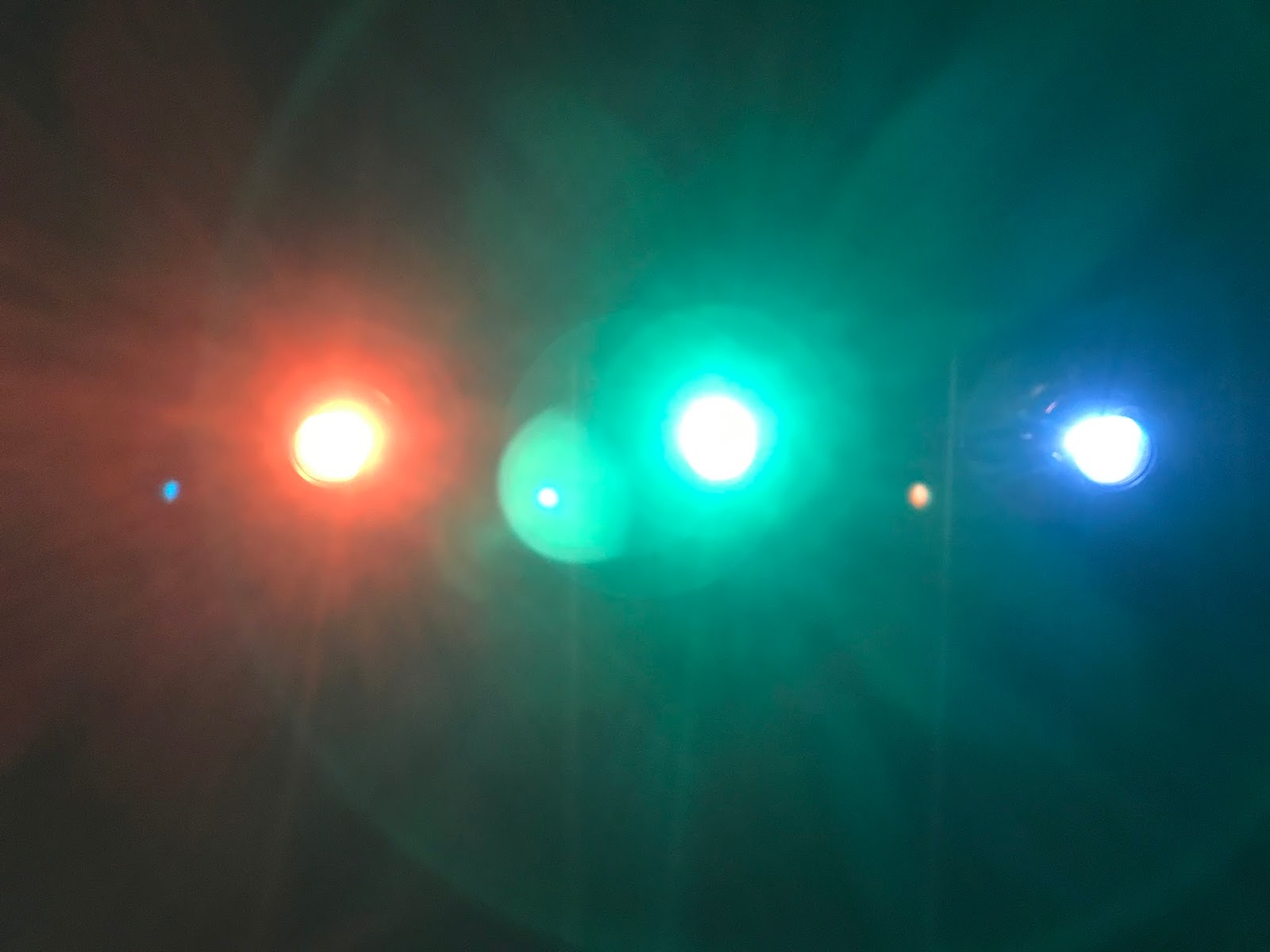
Here are some photos I took of myself exploring the light and shadows and the colours ... of course I took a whole heap... including a whole series of me walking slowly from one side to the other side and watching the colours come onto the screen as my body blocked the lights... as you see below the lights were arranged in a row - and together they made the screen white as you can see below.


The real fun came when you put your body in front of the lights. Personally it would have been fun if there had been a basket of objects relating to the exhibition - squares and triangles to play with as well, and then even more interesting personal art creations could evolve.

Below you can see two examples of her work where Sassen explores shapes and colours. Having worked with young children for a very long time I find these photos very inspirational as an inspiration source with children... to give the children various shapes and colours and to create shadows and take photos of their work... even without the use of shadows this would work as a great art exploration of shapes and colours.

As you see below in the outdoor playworkshop I held last week we also explored shapes, colours and shadows, using the sun, and the recently made colour exploration we had done on a sheet.

 This is a very simple way to create shadows... the wetness of the sheet also added an extra dimension to the whole shadow exploration.
Even above you can see that not all shadows are black... which is the usual answer I first get when I ask children, what colour is a shadow...

The below photographs are from the exhibition at the Fotografiska (if you are in Stockholm it is available to check out until 12th of November)


These images remind me of a light and shadow exploration in Aðalþing Leikskóli (preschool) in Iceland... below are some photos I took there. The lights COULD be arranged in the same way as above to create the coloured shadows... apparently I was too mesmerised by the whole thing to actually take a photograph of that and of the lamps... they were lights that that were on a flexible neck so they could be moved around for the children to explore.


In June I visited Överby Preschool in Vaxholm community... I have written about their sensory room - and you could read about it HERE as they work a great deal with light and shadow too as part of the sensory exploration. Eva Tuvhav Gullberg was the person who showed me around - she also took me to Redutten and an exhibition of art that she and other local artists had created with children from the area... light and shadow was a part of this too... take a look at the below photographs for inspiration...

shining light through a crystal


shadows via a reflection in a mirror

using two lights to create shadows of the robots the children had made from recycled materials... making more art from the art. Both lights could be moved around to change the dynamics of the shadows. The children could have the focus of creating constructions in order to make a dreamworld, or a the background for a puppet show, or... whatever your imagination comes up with... now I want to create a shadow forest...

experimenting with using lids and other materials on the lights to create new colours
A few years ago I created a light and shadow exploration for my preschoolers... here are a few photos from that... the idea was for the children to climb into their own artwork and to experience it in a new way, at the same time create something new... this was the final part of a longer exploration of light and shadows with these children, so they did have an awareness of what they were creating... the first few times were about exploring and playing... so it really is worth repeating these kinds of experiences for the children to gain a deeper understanding and let their play develop into a new kind of learning.


 The International Fairy Tea Party has also been a great opportunity to explore  shadows and the colour of shadows... fairy wings make great shadows


 There are many other ways to explore shadows and the colour of shadows... using projectors, lights, the sun, and overheads...

shadow puppet shows... not all of the shadows are black!

magnatiles on the overhead make colourful shadows


Sometimes there are great outdoor installations, like this one in Blåsut
that creates colourful shadows when the sun is out.
ice-cream spoons on the overhead


more mirrors outside to create reflection and shadows

The potential to explore shadows is great and varied... and so much fun...
a few more photos to inspire to end this post with - outdoor shadow explorations.


 The next post from Fotografiska will be taking the perspective of looking at the photographs as a stimulus for dialogues with young children....

Here is the link to Fotografiska to find out more


Monday, 4 September 2017

Bottles of Nature

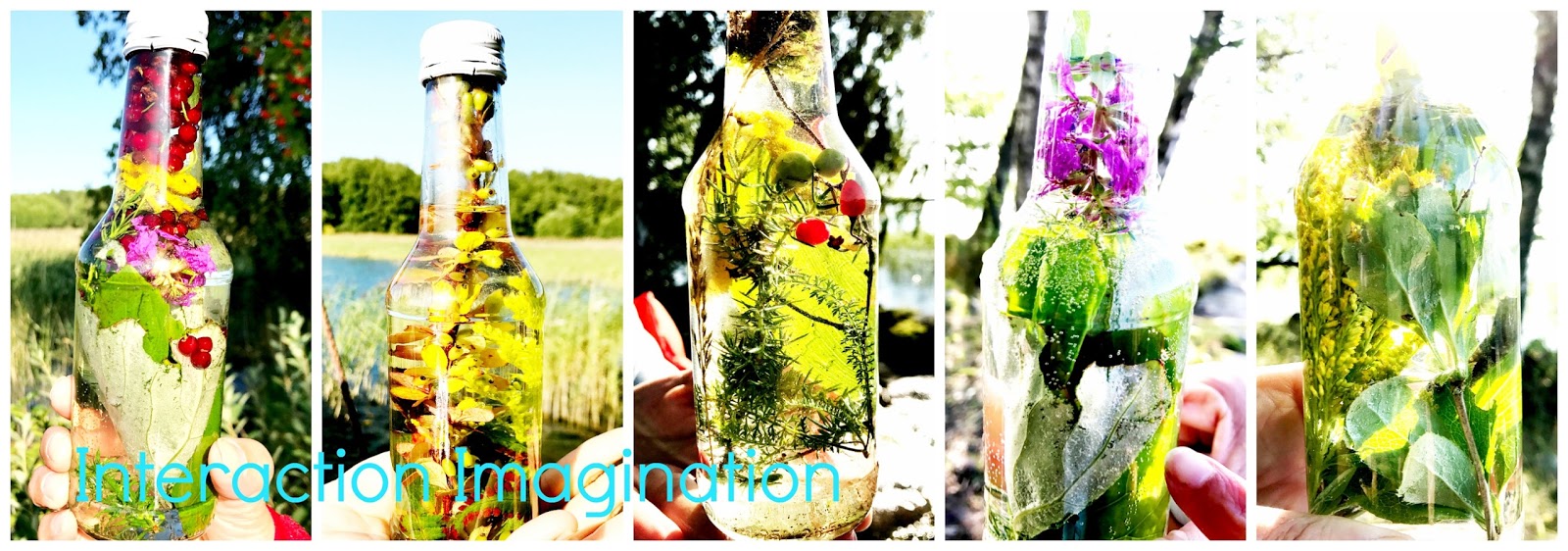
As part of the outdoor play and learning workshop we created bottles of nature. Since I had a focus on brining magic, imagination and creativity into play and learning the International Fairy Tea Party has been a great base for exploring these.


The idea was that the educators (I have also done this with children) should create their own magic potion, using what nature has to offer. I had 10 bottles of water... each filled to the brim, the purpose of this was so that water displacement could be experienced... as they put something into the bottle some water came out... some educators decided to empty a little water to create space... others just placed materials in carefully, and others enjoyed the splash of water coming out as they shoved more nature into their bottle... these are all different strategies and are worth while to observe as a teacher... do the children (or in this case educators) react as you though they would... do the observations give you more ideas about experimenting with water displacement?


No tools were given, so they had to find their own in nature to help get it down the narrow neck of the bottle... again this was with purpose to get children/educators thinking about problem solving.

In the forest there are things that should not be picked because they are endangered... this activity is a great way to share this information with children (and adults) in a meaningful way - to let them know that some leaves and flowers should not be in the bottle and explaining why).

As children/adults look for materials in the forest (or in any outdoor location of your choosing) the children get to see the small details, colours, textures, size, smells that maybe they would have missed. They make their own discoveries in nature.

When the children are satisfied with their bottle there is time to watch the sinking and floating, how the water and nature moves in the bottle if you put it upside down, or shake it... a chance to compare with others... how many have chosen the same things... why was that, what enticed them to putting that nature material in their bottles... this allows the children to see that sometimes the same material is chosen for very different reasons.

Then imagination can be brought back into the activity... what does their potion do... (reminding them that this is pretend) - is the potion meant to be bathed, in, wiped on the skin like a lotion, used on plants, on humans, as a medicine, to change things from one things to another... etc etc there are so many possibilities, really only the imagination can limit them... if you write down their words you have, as an educator, the chance to observe their language and communication skills. There is also the opportunity to take this further... to write stories about their magic potions (either together with the children if they are pre-writers - or let them write themselves if they are already writers and capable of creating their own stories on paper - drawing the story can also be an option). OR, the children could create a story together - thinking about what characters are in the story, what the potions do, For philosophical dialogues you could ask the children... are the potions for good or for bad., why are bad potions made.. how can the potions help people/animals/nature, which of the potions would be the most useful if they had to choose just one and why would it be the most useful...

The bottles I used were made of glass... of course plastic bottles can be used to... there could be an experiment with different size bottles, different shape bottles, different colour bottles... also the liquid used... one bottle could be oil, another water and a third vinegar etc so that over time the different processes could be observed - how do these liquids affect the nature inside them... if doing this maybe there is a need to have a more controlled content... ie the same number of berries, the same number of certain leaves etc...

The bottles can also be explored with light. We had painted on a sheet and when it was still wet we held it up with the sun shining through... we experimented with different materials to create shadows... including the bottles...
Other light sources can be used to explore the bottles - if you see in the film we did this... but think about doing this in the dark as well... or how about using UV light and giving the children the opportunity to experience the difference in colours... thus brining the nature bottles inside and connecting learning in and out.


Over time the bottles will change colour, the water quality will change, the contents will also change... many things the children can observe and ask questions about... or you as an educator can ask why the children think this is happening... thus children are given the chance to learn more about nature and science.

At the end of this post you can see a film I made about these bottles... including film footage of the bottles in action.

Of course there is the sensory value of these bottles too... to watch and be mesmerised with the finished bottles, using them as a calm down feeling. And during the collection process there is the smells and textures as well as the sounds and sights of the nature around them.


magic potions with preschoolers as part of an outdoor celebration of International Fairy Tea Party

magic potion making as part of an indoor celebration of International Fairy Tea Party ... indoors because of the fairy wings did not like rain... outdoor play came later when we took our wings off!!


Now for a few after photos... as I have kept these bottles for a year, and every now and again taken photos of them using different techniques... from sunlight, to torches and coloured light and also UV light...


sunlight - but why red? None of the other bottles went red despite containing the same berries... is it the mix of materials that has helped the red leach into the water...?

sunlight shadows

the mould growing is beautiful... this ONLY happened in one of the bottles

fairy lights to illuminate 

looking at the details

fairy lights in front... behind and above and below... what difference does this make?

UV light... nothing in any of the bottles glowed... some just ended up VERY dark... if you want a contrast, make a nature bottle with tonic water... as that DOES glow with UV light.

more details . to watch how the colours change with time
Also interesting to watch how SOME of the bottle developed lots of particles at the bottom while others only a bit... so many differences and yet so many similarities to observe and compare and discuss.

Friday, 1 September 2017

Observations... easier said than done?

During the last two weeks of being with the educators from Jenin, Palestine I have had the opportunity to view Swedish preschools (Stockholm and Vaxholm) through their eyes...

One of their questions throughout the study trip has been how do teachers do observations... as all the teachers have talked about that the teaching is based on their observations of the children. Most of the preschools we only visited for a short time, so that made it hard for us to observe the educators observing the children... and the preschools we visited for a longer period of time said that they were not doing any activities with the children yet because they were observing them... but the educators from Jenin could not see how the children were being observed.
When I asked about this it became apparent that this was not something that was actually being done at the preschool... and when you start scraping at the surface of this there is more to it than just it is not being done. The preschools we visited for a longer period of time are located in a suburb of Stockholm where there is mostly immigrants (and I say this not as a loaded word, as I too am an immigrant in Sweden, but my British passport has made me, maybe, a more desirable immigrant and therefore easier for me to be accepted in the Swedish society - but I would also like to point out it was not plain sailing for me either) - but in this suburb there is a need for high quality preschools, with well trained teachers... the problem is that attracting well trained teachers to this area is hard, and the ones that are working there are under an enormous strain as many of their colleagues working with the children have no education/training with young children or children at all.

Of course this was unfortunate for the educators from Jenin who were looking forward to learning how to observe the children... as the people they were shadowing were also in need of the same support. ( I will go more into this in a later post)

So this post is born from that... a need to take a look at observations...

After the summer holiday/vacation the children return to preschool, and for some reason some preschools have felt the need to start from scratch... even with children that have been with them for several years... no activities are put on because "we are observing the children"...
My question is what is being observed? Also, what do the educators need to know to be able to meet the children's needs...
These are questions that can be written down before the summer, almost like a standard cheat sheet sort of thing...
a teacher needs to know...

  • how has the child developed since before summer
  • gross motor skills
  • fine motor skills
  • language and communication
  • social
  • emotional
  • their interests
I think this is a good place to start... so to find out about these areas there is a need for activities to be able to see where the children are, and to be able to make plans for what each child and the group need for continued support through activities and interactions...

The educators need to think about how to check for the motor skills - providing activities that allow them to see how the child holds a pen, or uses the pincer grip, how they can sit on the floor or a chair, how the child walks, runs, jumps (with two legs, one leg) how they go up and down the stairs, how they climb... doing games, going to play spaces, working with beads, drawing and painting can all help the educator to learn more about the child - and through note-taking, photos, films and reflecting together with colleagues there is the chance to make plans as to what sort of activities are needed in the future... if many in the group have weak gross motor skills then there is no point doing lots of sit down activities and getting them to read and write, it is a much better investment to get outside (and inside) to do climbing, running games, exploring the forest (where the ground is uneven) etc etc where muscles and balance can be developed and strengthened that are all essential for concentration - even for being able to sit in a chair... weak stomach and back muscles make chair sitting hard (not that children need to be doing sit ups... but through climbing, crawling and balancing on logs/beams etc they can be strengthened)

How do you observe a language? This is something that needs to be discussed in your group of educators (as with all the areas)... you can look for do the children follow one step, two step or three step instructions? How complex are their sentences... a few words or more... how is the pronunciation... is there a need for blowing bubbles, eating chewy food etc to strengthen mouth muscles... are they following the thread of the dialogue or are they often going off topic (pragmatic language development)... Language can be observed and recorded by writing down what they say in group meetings (verbatim, including what the teacher says, so that you can see the interaction) - through individual interviews (where you can find out more about what they are interested in, what they like to play and also what they want to learn... I LOVE asking that question... you always get some interesting answers... and I always try to ask so that the children cannot hear each other and influence each other's answers). You can also observe language through listening to their play... writing, filming how they communicate with each other... is there a child dominating the conversations, are there others getting frustrated because they cannot communicate as efficiently as they want to? etc etc...

For the last five years I have started the year with International Fairy Tea Party... and through activities covering fairies and magic I have observed the children and listened out for their interests... I have also met with their parents to talk about what the children were interested in over the summer, what they have learned, if any fears have developed or any passions arisen... this then allows me to see the whole child... my observations, the children's point of view through the interviews and the parents observations... it gives me a better chance of getting the direction of our learning journey together right...

Also working with the same children over a period of years also helps with this so much, as I do not need to build the trust between myself and the children every year... we can just continue from where we left off, and that is truly a beautiful thing.

The fairy tea party has been a great way to start the year, magic and curiosity baked into the activities that have allowed the children to bond together as a group, as they share wonderous experiences together, this creates a feeling of safety, it also kick starts their imaginations and creativity that has really helped with projects that have followed on from the fairy tea party. And since we start with the same tradition every year there is no need to invent the wheel every time... just the need to tweak activities to improve them or adjust them to meet the needs of the group. This means that there is more time for the educators to observe and reflect on the children and group, rather than on the activities. And since we have done this for many years with children from 1-5 with different interests over the years, we have a wide array of activities, interactions, experiences for the children to participate in documented and reflected on. Of course the first year will take a bit more thinking and reflecting... BUT everyone has to start somewhere, and it is a good investment to have some kind of start-up tradition that allows educators to focus on observing the children in a manner that is structured.

Free play should always be a part of the day, so I am not talking about structured the entire day.

The director/pedagogical leader should be key in supporting educators in finding strategies into how to observe children, how to observe their learning, what learning needs to be prioritised (at any given time, maybe there are situations that need to be responded too), how these observations are collected as data, and how this data is analysed to provide the basis of continued learning.

Here are some posts that might help with learning more about observation making...

Reflecting on the usage of the light table - this post includes my reflections of my observations, so that I can better understand how the light table is being used and also how it can be improved.

Painting with one year olds - my observations of a session with one year olds, and the reasons this activity was chosen with that particular child.

Painting by letter/Testing boundaries - this post shows how my observations and a dialogue with others prompted this activity to further explore how the children interacted with each other when it came to boundaries, to better understand how I could support these children in their social interactions.

Clay and two year olds - this post shares my observations of a group of two year olds working with clay.

Observations - the Sherlock Holmes approach - this post explores some of the thinking behind observing children... how we can discuss with colleagues, how we can be aware of how we are observing and why we are observing.

Making learning visible - this post is about how the children were enables to observe their own development. I also knew that some of the children did not like to draw anything that was less than perfect... and this is why the Leonardo da Vinci project was in part suggested (and embraced) as da Vinci believed in learning from mistakes and practising until satisfied... this Really did help the children.


Pedagogical documentation - this is the first in series of posts about pedagogical documentation... this one focuses on observations and collecting data... 

Democracy as a relationship - this is a reminder that observations should not be done in isolation, but together with colleagues, the children and the parents...

Progettazione - this post was written together with Debi Keyte-Hartland  and is about a more in depth look at projects, the Reggio Emilia Approach way... how observations and interpretations of those observations support how to proceed with activities, projects and interactions with the children.

Co-documenters - this post is a reminder again of how the children are an important part of the process... that they too observe and have an opinion of how you collect your observations and that they can be interpreted together.